
Dry smoke
Fast, high-temperature fires can leave a fine powder that travels easily into seams, electronics, and hidden cavities.

Surface-specific soot cleaning and professional deodorization for walls, HVAC systems, furniture, and belongings.
You do not need to diagnose the full extent yourself. Keep people away from unsafe areas, avoid disturbing damaged materials, and call so the situation can be assessed correctly.
Talk to the response team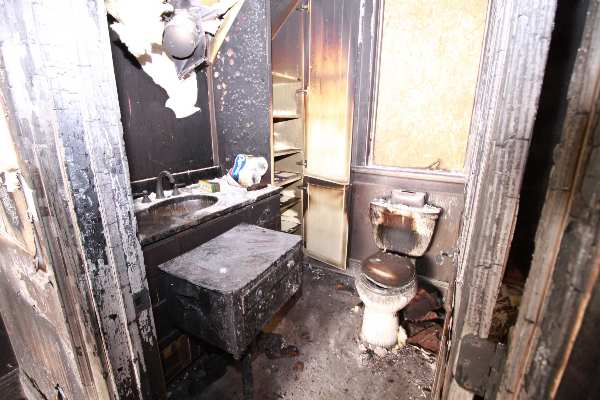
Smoke behaves differently based on what burned, how hot the fire became, and how air moved through the property. Using the wrong cleaner can smear residue, set staining, or push odor deeper into a surface.
Fast, high-temperature fires can leave a fine powder that travels easily into seams, electronics, and hidden cavities.
Slow, low-temperature fires often produce sticky, smeary residue with a strong odor that is difficult to remove from porous materials.
Kitchen fires may leave a nearly invisible film that discolors finishes and carries an intense odor despite limited visible soot.
Fuel-oil and synthetic-material fires can create greasy, toxic residue requiring careful surface and contents handling.
Air movement can carry particles far from the fire room and deposit them inside ducts, insulation, closets, and wall assemblies.
Source removal comes first. Specialized cleaning, air filtration, thermal fogging, ozone, or other methods may then be selected for the conditions found.
The work is organized around four outcomes that protect the property and make the path forward easier to understand.
Every loss is different, but the communication should always be direct and the scope should always be documented.
Identify the source, safety concerns, affected materials, and what needs immediate action.
Contain or secure the area, stop ongoing damage where possible, and protect unaffected spaces.
Remove, clean, dry, repair, or rebuild according to the conditions found on site.
Confirm the work, organize documentation, and walk through the completed scope with you.
Early handling choices can affect whether a surface or belonging is restorable.
Call 404-267-3647Keep the HVAC system off until it has been assessed for smoke contamination.
Do not wipe soot with water, household spray, or an untreated cloth.
Do not send smoke-damaged textiles through ordinary laundry or dry cleaning without restoration guidance.
Avoid fragrances and aerosol odor maskers; they do not remove the source.
Call early, especially when metal, stone, glass, appliances, or electronics carry visible residue.
Still unsure? Call the response line and tell us what happened. A quick conversation can make the next step much clearer.
Call 404-267-3647Smoke particles can settle in porous materials, wall cavities, and ductwork. Masking the smell is temporary; the source needs to be removed or neutralized.
Often, yes. The result depends on material type, heat exposure, soot composition, and how quickly the item is treated.
Not by itself. Surfaces must be cleaned and deodorized first, then properly sealed when needed, before finishing work begins.
One call connects you with a real person who can help you understand the next step.